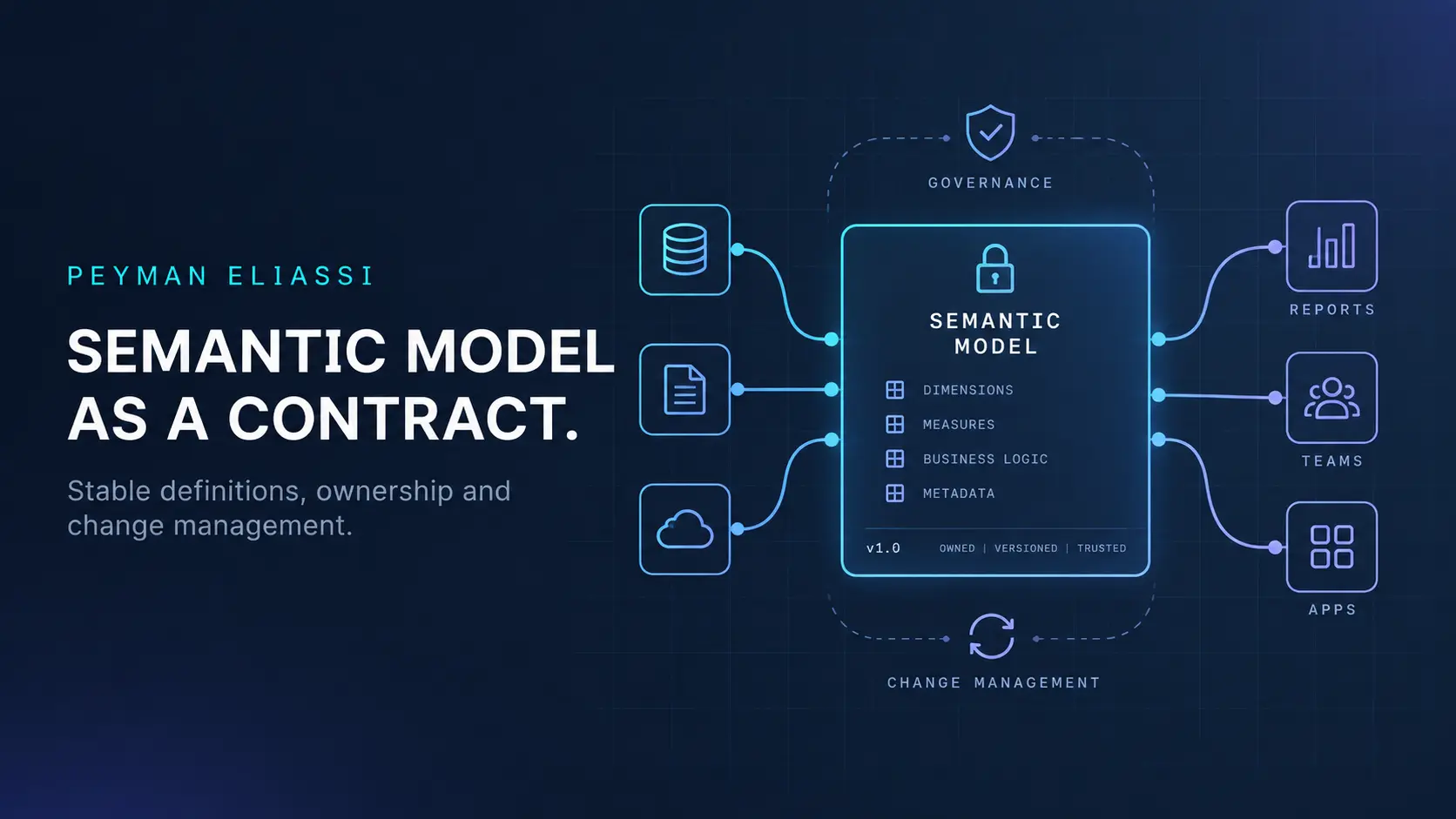
A semantic model is an interface between business meaning and technical data. Like any interface, it needs documented behavior, clear ownership, and a plan for changes.
Define business meaning in one place
Agree on metric definitions, grain, time behavior, and filter expectations. A measure named “Revenue” is not self-explanatory if one team uses invoiced revenue and another uses recognized revenue.
Document the intended audience and the decisions the model supports. A focused model with clear semantics is often more useful than an oversized model designed to anticipate every possible request.
Plan for change
Track changes to relationships, columns, and measures as you would changes to any shared interface. Evaluate downstream reports and consumers before removing or redefining a widely used field.
A practical release note should explain what changed, why it changed, and what report owners need to do.
Pair trust with observability
Model quality depends on more than correct DAX. Monitor refresh outcomes, data freshness, access patterns, and usage where appropriate. Give users a clear way to report a discrepancy and identify who can investigate it.
Trust is built when a team can explain both what a number means and what happens when that number looks wrong.